The second element of a portrait studio is controlled lighting. With lights on stands or hanging from the ceiling, you get to pick the angle at which light will strike your subject. With umbrellas and other diffusion equipment, you get to pick the harshness of the shadows on your subject (see out studio photography primer). There are some pretty reasonable portable flash kits consisting of a couple of lights, light stands, and umbrellas. These cost $500-1000 and take 20 minutes or so to set up on location. If you don't have the money, time, or muscles to bring a light package to a project, the standard way to cheat is to park your subject next to a large window and put a white reflecting card on the other side. Don't forget the tripod, because you'll probably be forced to use slow shutter speeds.
Stealing a Location
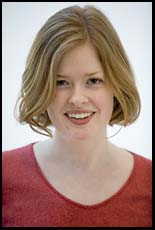
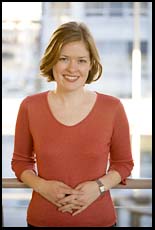
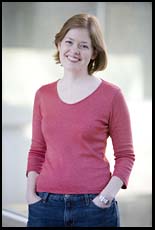
What if you don't have a big open space with diffuse light and a neutral background? Steal one. If you live in the United States, a vast open space with light pouring in from expensive skylights is as close as your nearest art museum or university. With a 200mm lens set to f/2.8, the background will be thrown out of focus. Here are some examples from the Boston Museum of Fine Arts and a couple of lobbies at MIT, taken on a cold February day in Boston. Canon EOS-5D, 70-200/2.8 IS lens, handheld without flash.
Lighting

The most flattering light for most portraits is soft and off-camera. A large north-facing window works, as does the electronic equivalent, the softbox (light bank). The Elsa Dorfman Polaroid photo at the top right was taken with two large light banks, one on either side of the camera. Note that there are essentially no shadows.
If your subject is outdoors, an overcast day is best. If the day is sunny, make sure to use a reflector or electronic flash to fill in shadows underneath the eyes.
At right: In a New York loft, light coming from a bank of windows at left. Canon 70-200/2.8 lens on tripod. Possibly some fill-flash. Fuji ISO 400 color negative film.


No comments:
Post a Comment